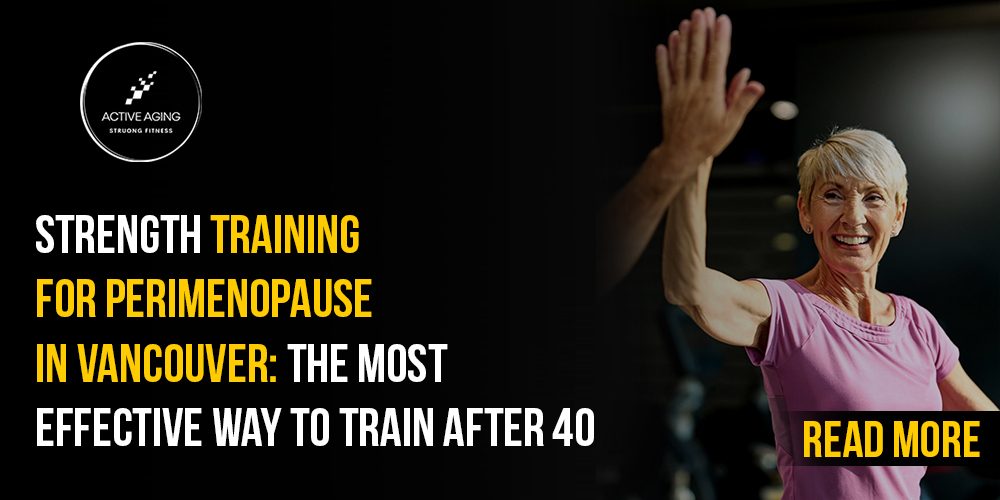
If you’re searching for strength training for perimenopause in Vancouver, it’s likely because what used to work no longer does. Cardio-heavy routines, calorie cutting, and random workouts often stop producing results during this stage of life.
As a Vancouver personal trainer and perimenopause coach, I work with women who are consistent, motivated, and disciplined, yet feel weaker, more inflamed, or stuck. The issue isn’t an effort. It’s a mismatch between training style and physiology.
Why Strength Training Matters In Perimenopause
Perimenopause is marked by fluctuating estrogen and progesterone. These hormones influence muscle mass, bone density, insulin sensitivity, and recovery. As estrogen becomes inconsistent, the body becomes more sensitive to stress and less tolerant of excessive volume or intensity.
Strength training provides the signal the perimenopausal body needs: safety, stability, and resilience. It improves body composition without overstimulating the nervous system. Strength training vs cardio in perimenopause
Excessive cardio elevates cortisol, increases fatigue, and often worsens belly fat during perimenopause. While cardiovascular health is important, cardio should support, not replace, strength training.
Strength training lowers cortisol over time, improves insulin sensitivity, preserves lean muscle, and supports bone density. These adaptations are essential for women over 40. Muscle loss and metabolism in perimenopause
Without strength training, women can lose muscle mass during perimenopause, which lowers metabolic rate and makes fat loss harder. Muscle is a metabolically active tissue and plays a key role in blood sugar regulation.
This is why strength training is non-negotiable for sustainable fat loss in perimenopause.
How To Structure Strength Training In Perimenopause
Effective strength training for perimenopause focuses on progressive overload, adequate recovery, and manageable volume. More is not better. Better is better. When your workouts are intentional and structured, your body can adapt, get stronger, and feel more stable through hormonal changes.
Most women benefit from 3 to 4 strength sessions per week, prioritizing compound movements, proper rest periods, and recovery days. This routine is challenging but realistic, letting you balance work, family, and energy while still seeing progress in strength, mood, and overall health.
Nervous System Regulation And Recovery
Sleep quality, rest days, and stress management directly influence training results. You cannot out-train a dysregulated nervous system in perimenopause. When your nervous system is calmer, your body builds muscle better, recovers faster, and handles everyday stress without feeling constantly wired or exhausted.
Training should leave you stronger and more capable, not depleted. After a workout, you should feel pleasantly tired, clear-headed, and proud of your effort, not wiped out, sore for days, or dreading the next session.
Strength Training For Perimenopause Is About Longevity, Not Punishment
The goal is not to burn the most calories. It is to build strength, protect joints, support hormones, and maintain independence for decades to come. Training this way helps you lift groceries, climb stairs, travel, and enjoy life without constantly worrying about pain, fatigue, or injury.
Perimenopause Coaching In Vancouver
At Struong Fitness, perimenopause coaching integrates hormone-aware strength training, metabolic repair, and nervous system regulation for women over 40.
If you’re looking for perimenopause couching in Vancouver, working with a coach who understands female physiology makes all the difference.